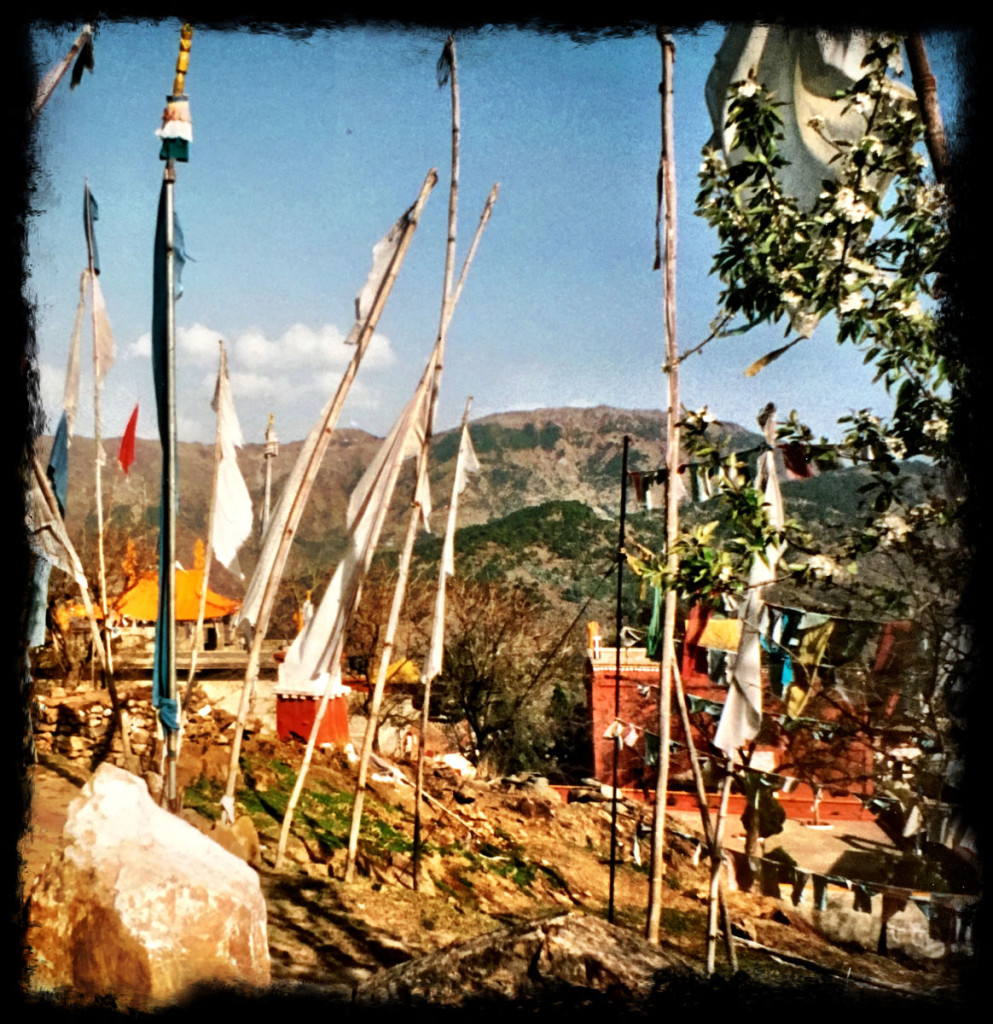
Hidden in the foothills of the Himalayan foothills at around 5,500 feet, the inspiration for this journey unexpectedly began here.
Travel Inspiration: Stumbling Upon the Tibetan Sacred Arts in India
Art
cancer
creativity
healing
inspiration
Mandala
Healing Icons
art
creativity
inspiration
Finding Inspiration Outside My Comfort Zone...
One of the things I have learned from my love of travel is that you never know what profound inspiration awaits around the next corner. I love that feeling, that rush, that force of inspiration that breathes a palpable life-force into my spirit. To be infused with that spark of creative inspiration from a place I have never been before or a culture I have never experienced, is one of the reasons I love to travel to places outside my comfort zone.
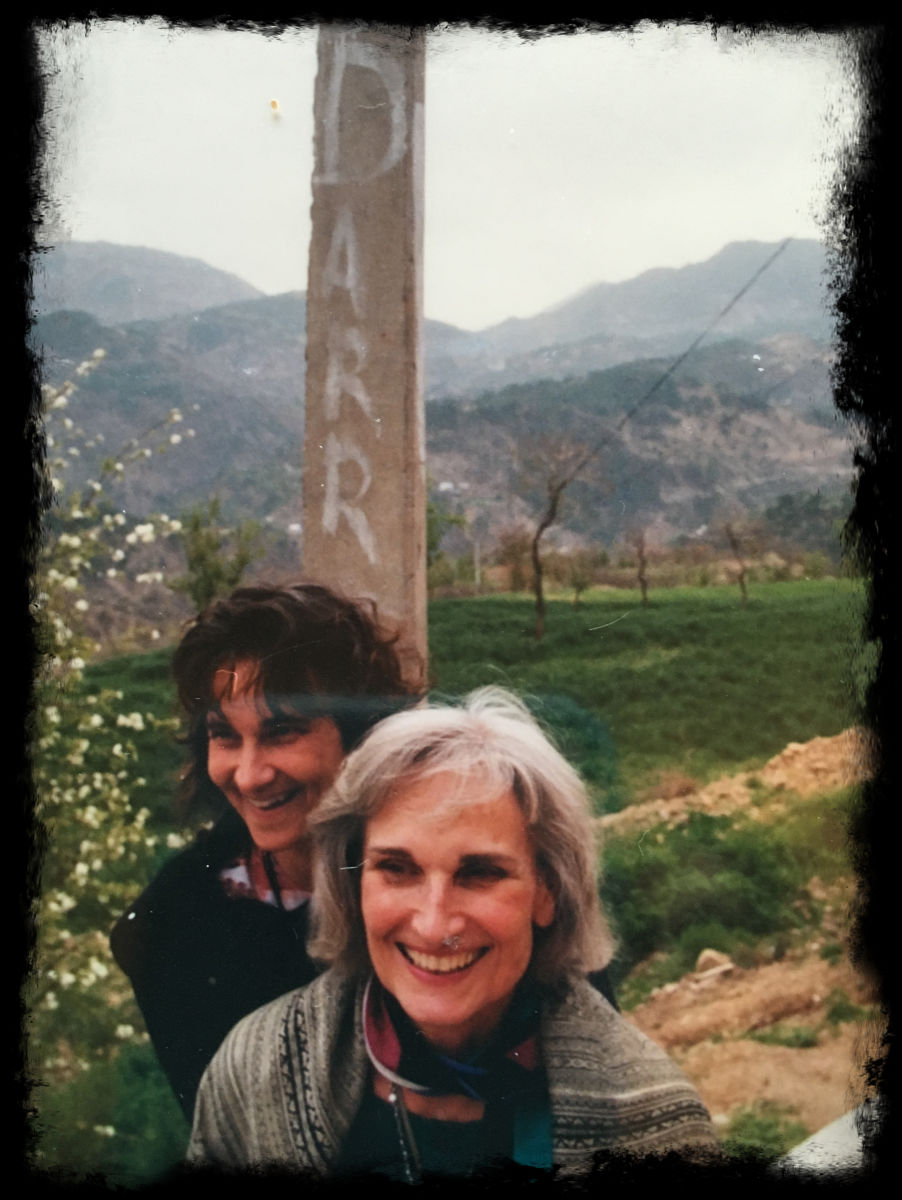
India was definitely outside my comfort zone. As I began to think about how to celebrate Healing Icons 20th anniversary, I knew I wanted to pay tribute to the Tibetan people that I met while I was in northern India. I wanted to tell the story of how their sacred arts traditions played a role in the art practices I created for Healing Icons.Note the letters on the cement column behind my Mom, Winona Darr and me.Strange and welcoming at the same time.
Dolanji, India - Tibetan Refugee Settlement
In the spring of 2000, I traveled to northern India with my Mom and two other pals. Our journey started in New Delhi where my cousin was living. After spending a few days recovering from our series of super long flights, we made our way to the very small village of Dolanji, India. Dolanji is one of the land settlements for Tibetan Refugees who were escaping the fierce brutality of China. This community has become the safe keeper of Tibet's 17,000 year old indigenous faith. We were there to visit and stay at the Tibetan BonpoMen-ri Monastery. Our humble accommodations were just outside the monastery "compound" as women are not allowed to stay on the grounds. To this day, I can vividly recall the following entries from my journal.
Journal Ramblings
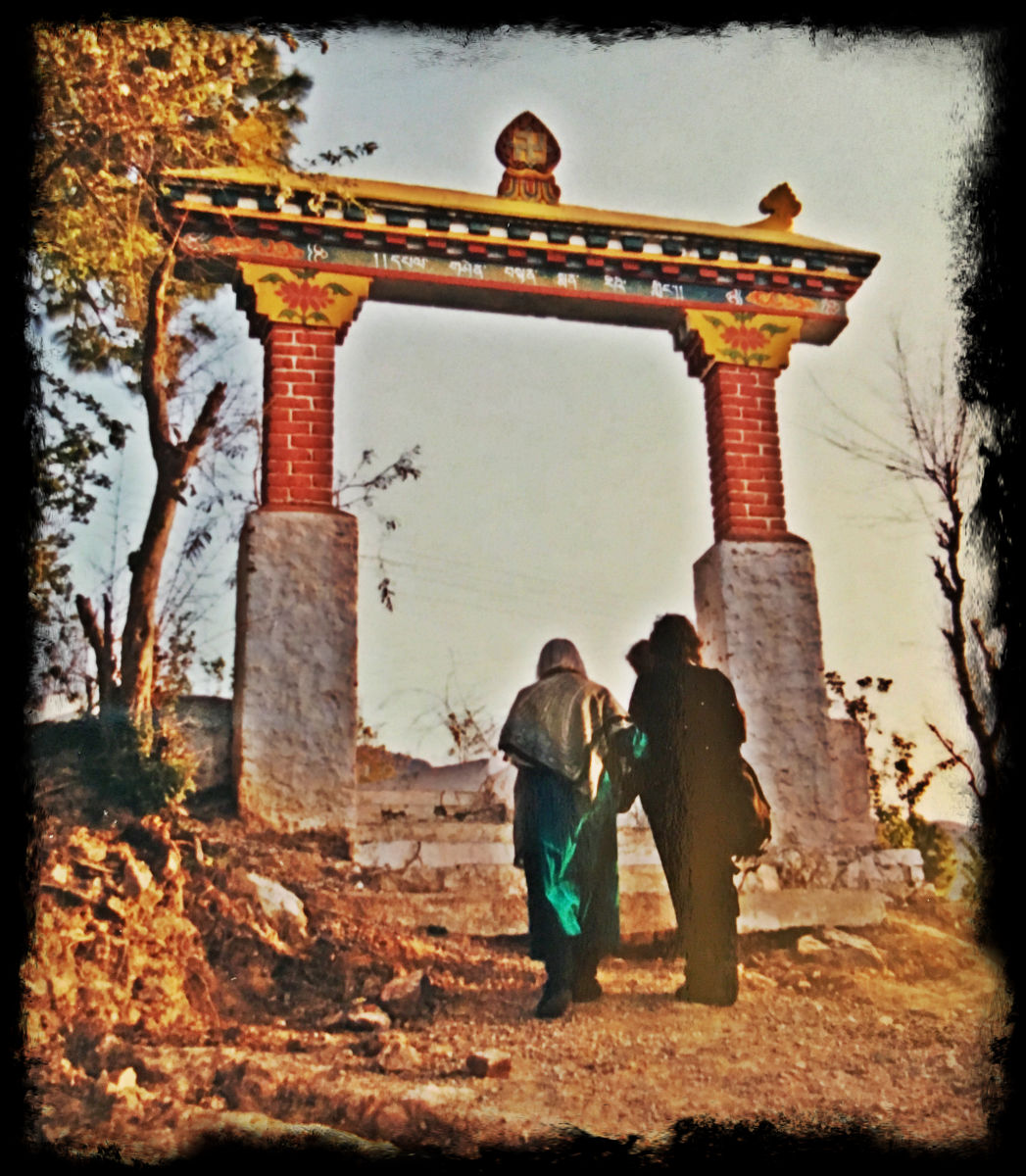
Reaching the "doorway," the threshold into an unsuspected creative inspiration - a Tibetan Monastery.
Just after sunrise, we shuffle up the dirt path that leads to the monastery. We have been invited to sit for the morning chants. The wind has shifted and is coming over the not too distant Himalayan mountains, bringing a cool crisp active breeze. I am in awe, as I slip off my shoes and enter the temple. We are welcomed with open arms that gesture for us to sit against the back wall.
Sock footed, clean shaven, exotic
Dark skinned, red-robed monks
Sit upright chanting in rows facing each other
Deep voices, intermingle with the sounds of lilting songbirds
And the voices of young boys chanting from the next door building
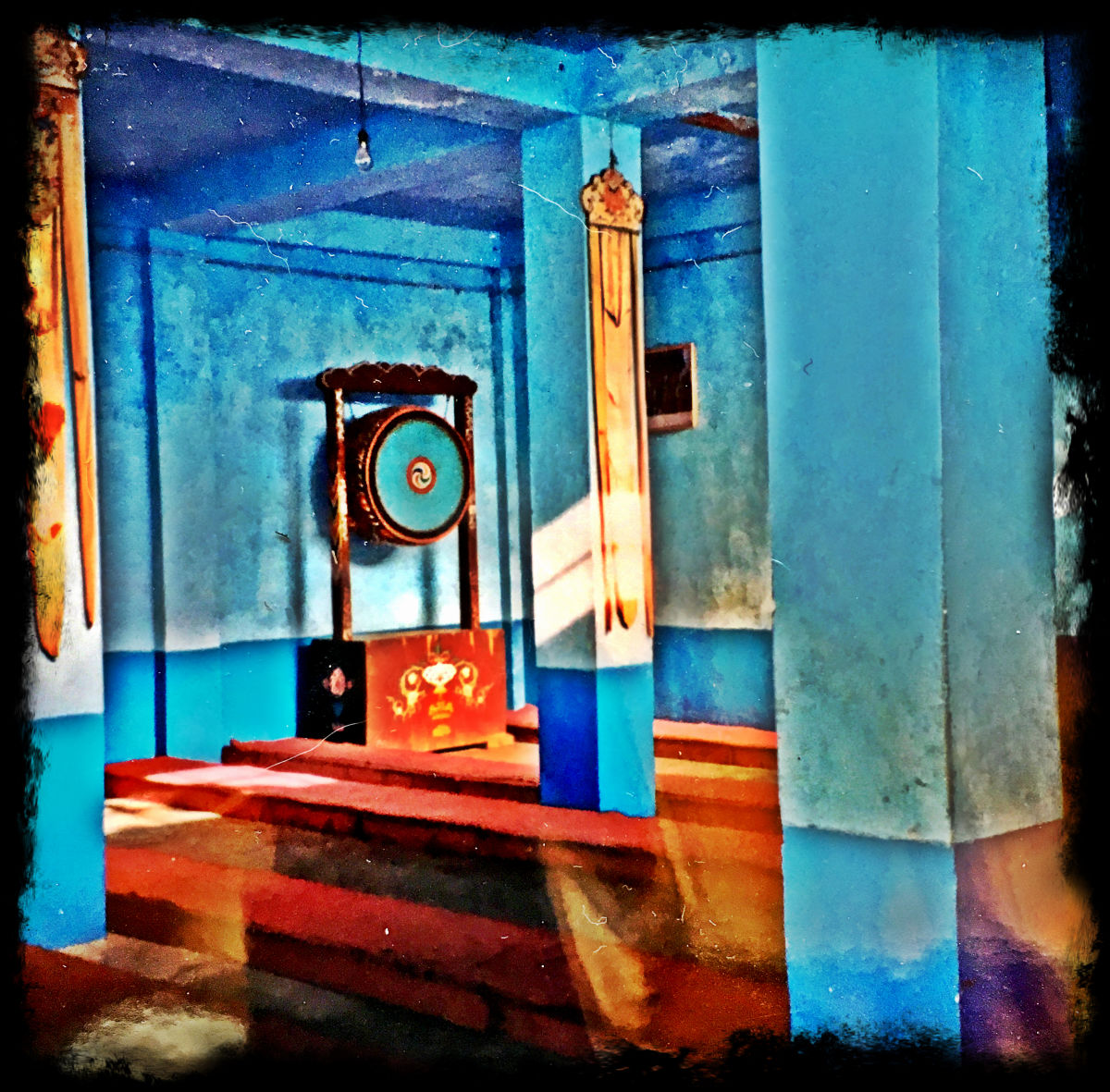
This is my kind of sacred space, filled with bold, bright color.
The volume and strength
Reverberates in my body
Then suddenly diminishes
A space of silence enters
A bell rings, another chant begins...
Creaking sounds of a wooded cart
Piled high with warm chapati
Joins the chanting
Above me, the bright azure ceiling protect
Around me, the turquoise walls
The shimmering golden columns caress
The vivid bright colored patterned symbols
Speak without any words
I can hardly sit still
I am inside a living, breathing work of art
I do not want to leave this place.
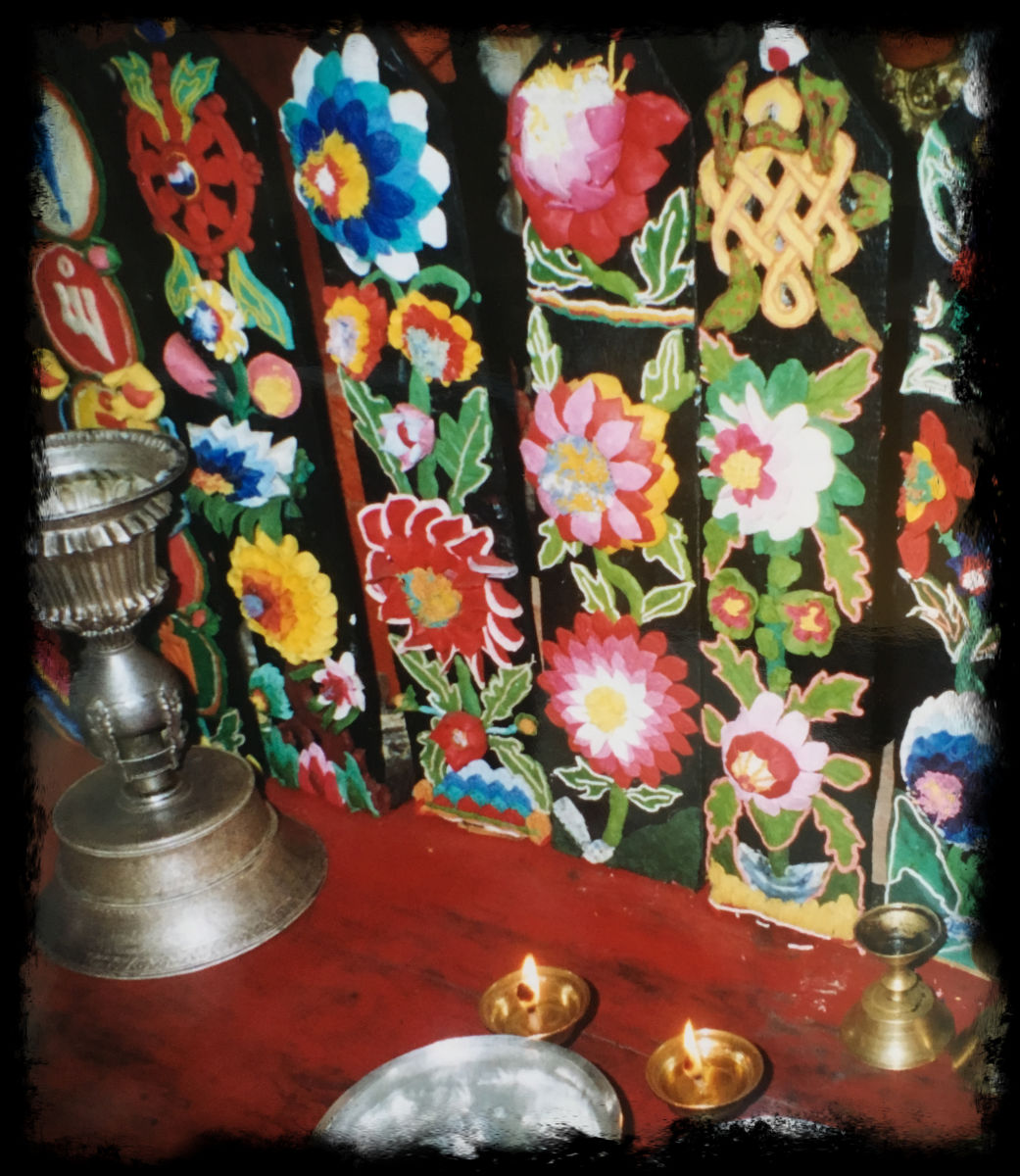
Detail of one of the many altars - these colorfully patterned sacred symbols are created from beeswax. Incredible!This temple filled me with inspiration - these rich visual symbols speak a powerful silent language.
Creating Ritual Objects, Art for the Dead
Meticulously crafting prayerful objects that will have many layers of meaning - a specific healing intention and symbol of impermanence and non-attachment.
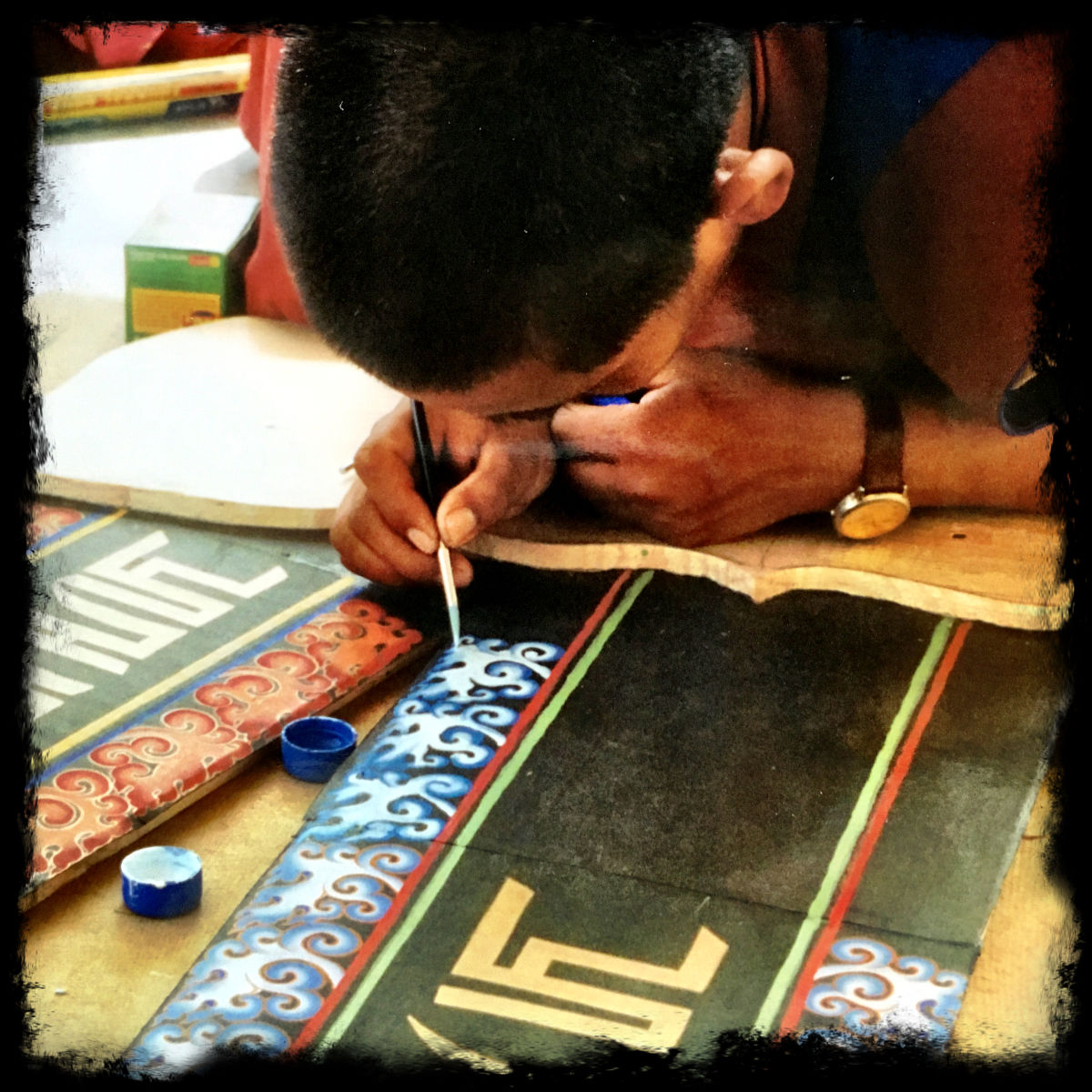
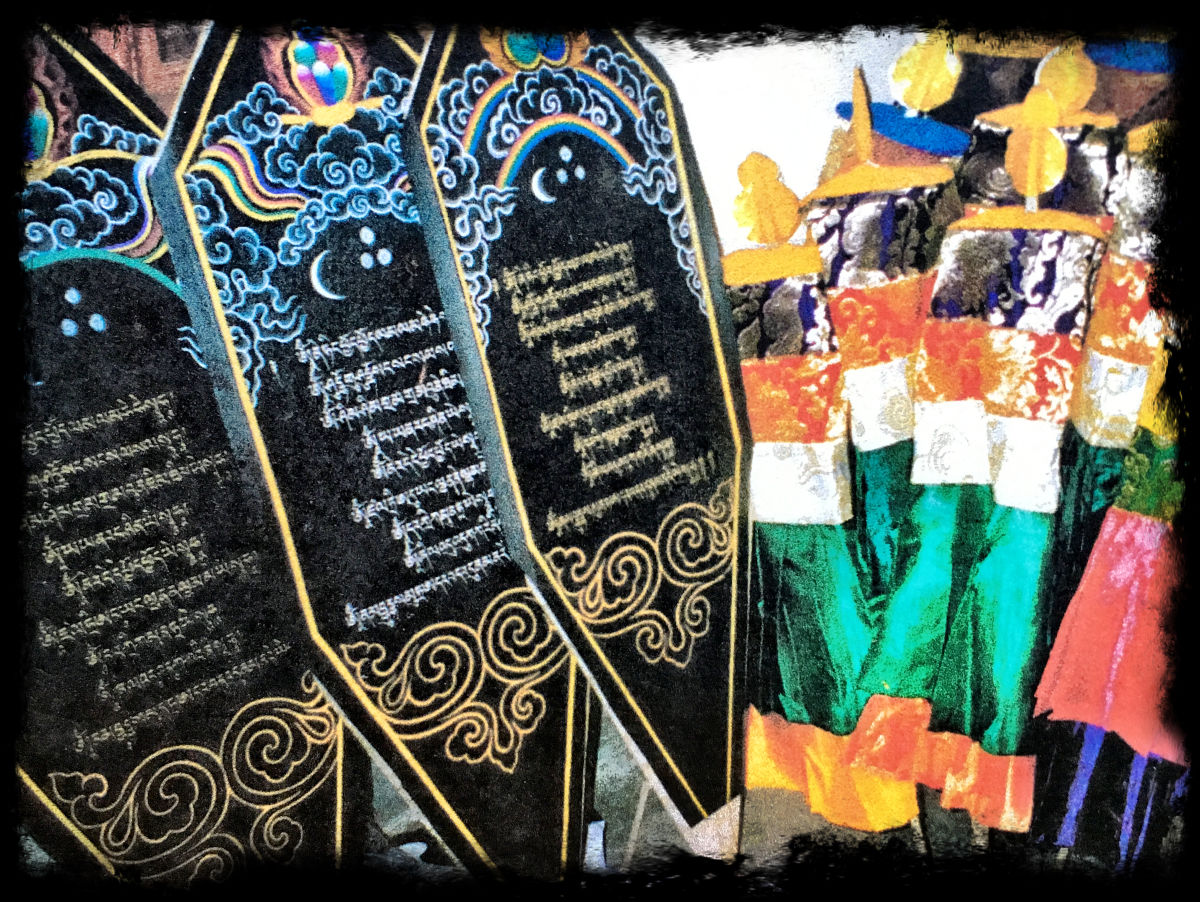
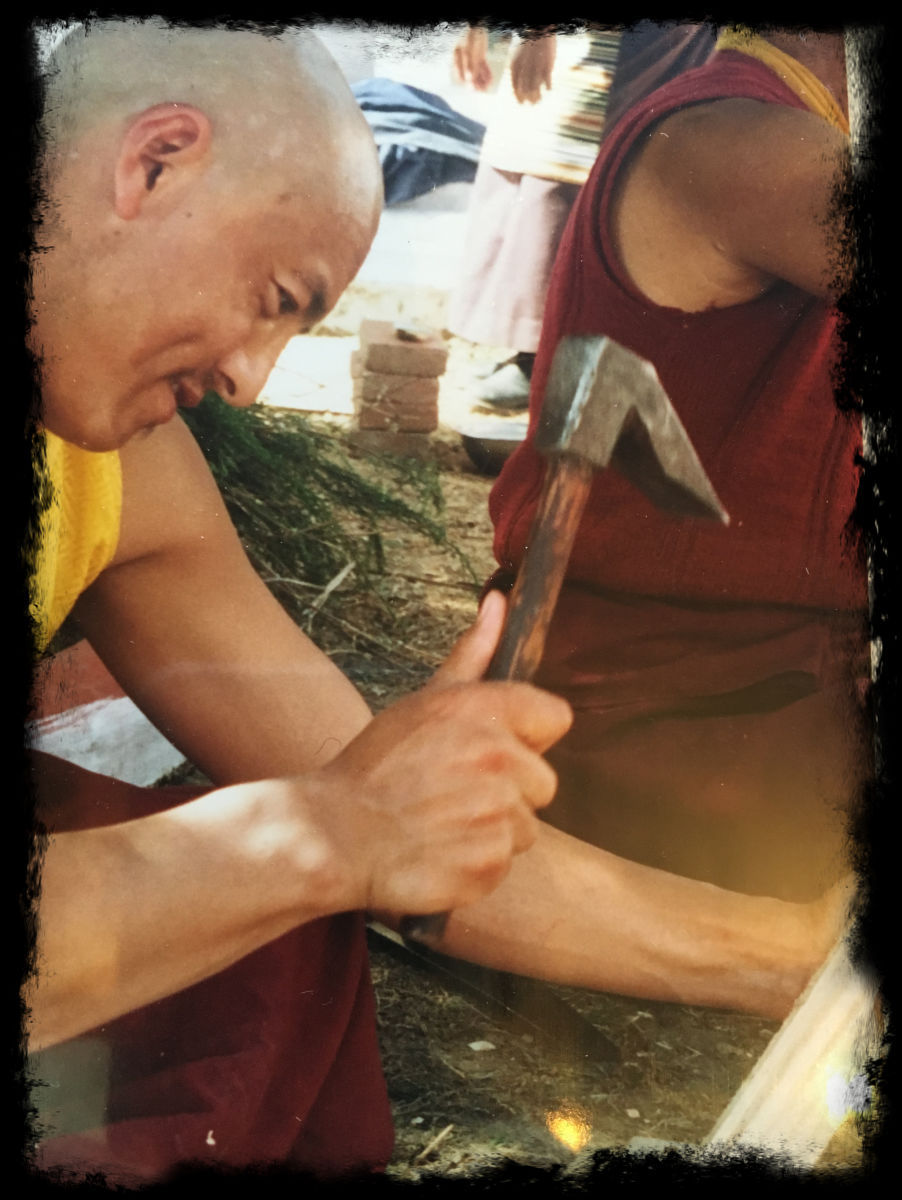
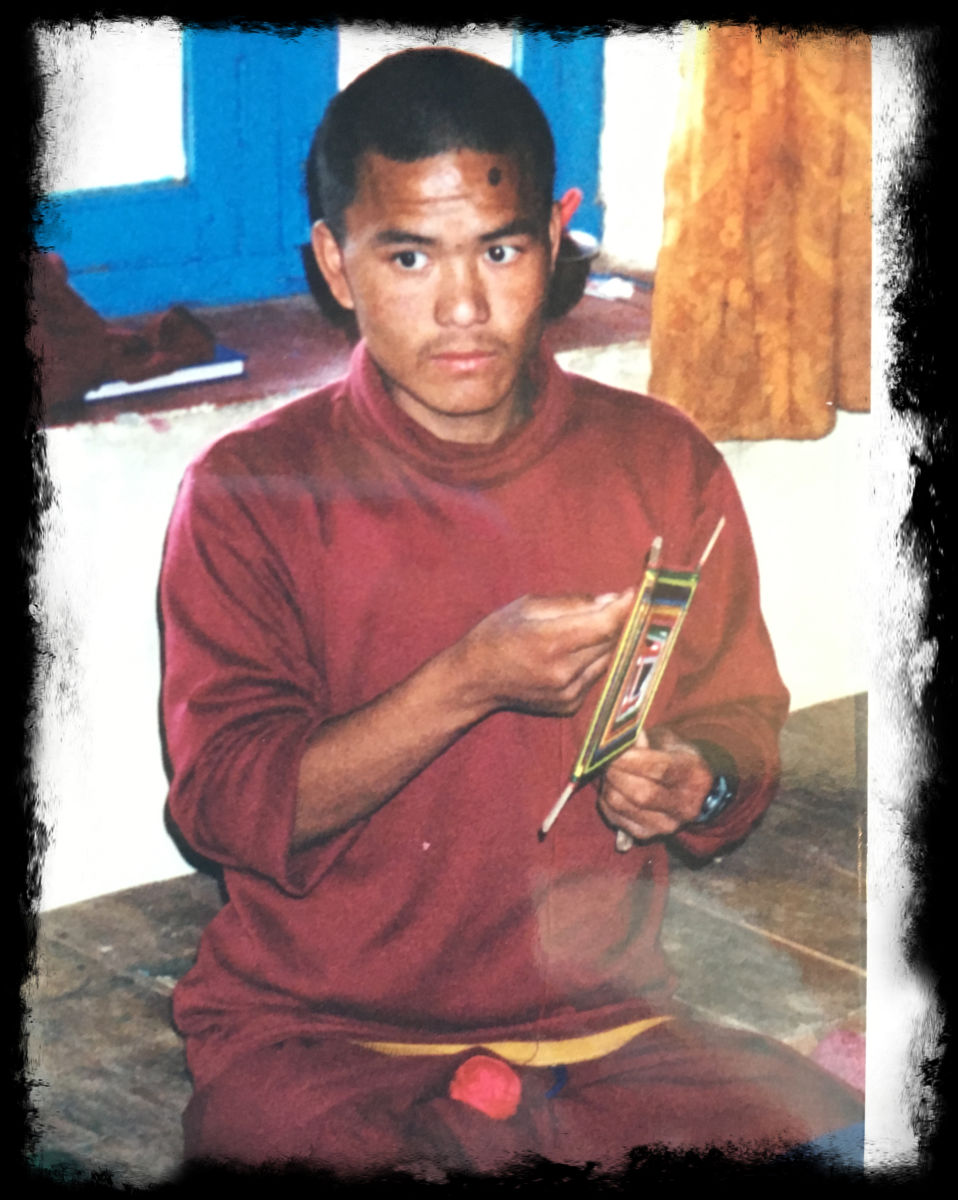
The monastery grounds were filled with monks creating all sorts of visual delights - beautiful amulets, talismans, mandalas, prayer flags, and small paintings. This had been going on for over a year. They were preparing for a ritual that would help usher a deceased spirit into the next realm. Sacred mantras were constantly chanted while the monks created these ritual objects. Being in the middle of all this felt wonderfully otherworldly. In case you aren't familiar with the word mantra, it is simply a brief powerful prayer composed of sacred syllables.
I assumed all of these carefully crafted objects would be used within the ceremony and then given to all those in attendance. From my western worldview, these beautiful objects were art, meant to be cherished keepsakes. What a meaningful, inspiring way to memorialize someone's life, I thought to myself.
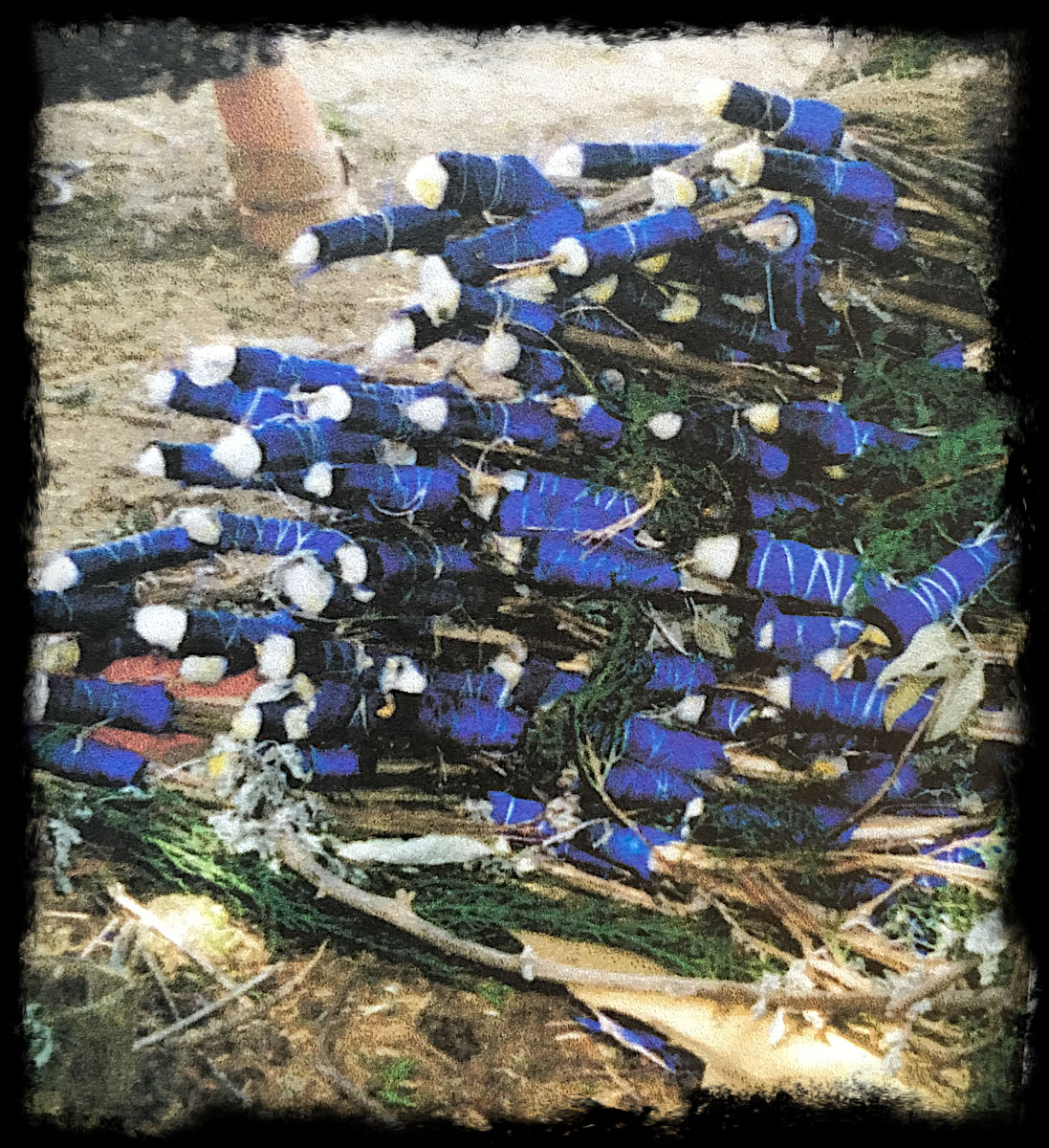
Translating from Tibetan into English is not always easy and the information came slowly. When I realized what was being said, I was shocked and mystified. I couldn't fathom that all this work, all these beautiful creations were going to all go up in smoke. Yes, they were all to be burned within a funereal ritual. Wow! The Buddhist tenets of non-attachment and impermanence were exquisitely demonstrated in this practice. The more I thought about it, the more I understood that the finished product, the object itself, was not something to be prized or coveted but stood as a living, breathing symbol that held a specific energetic intention. I began to feel that spark of inspiration.
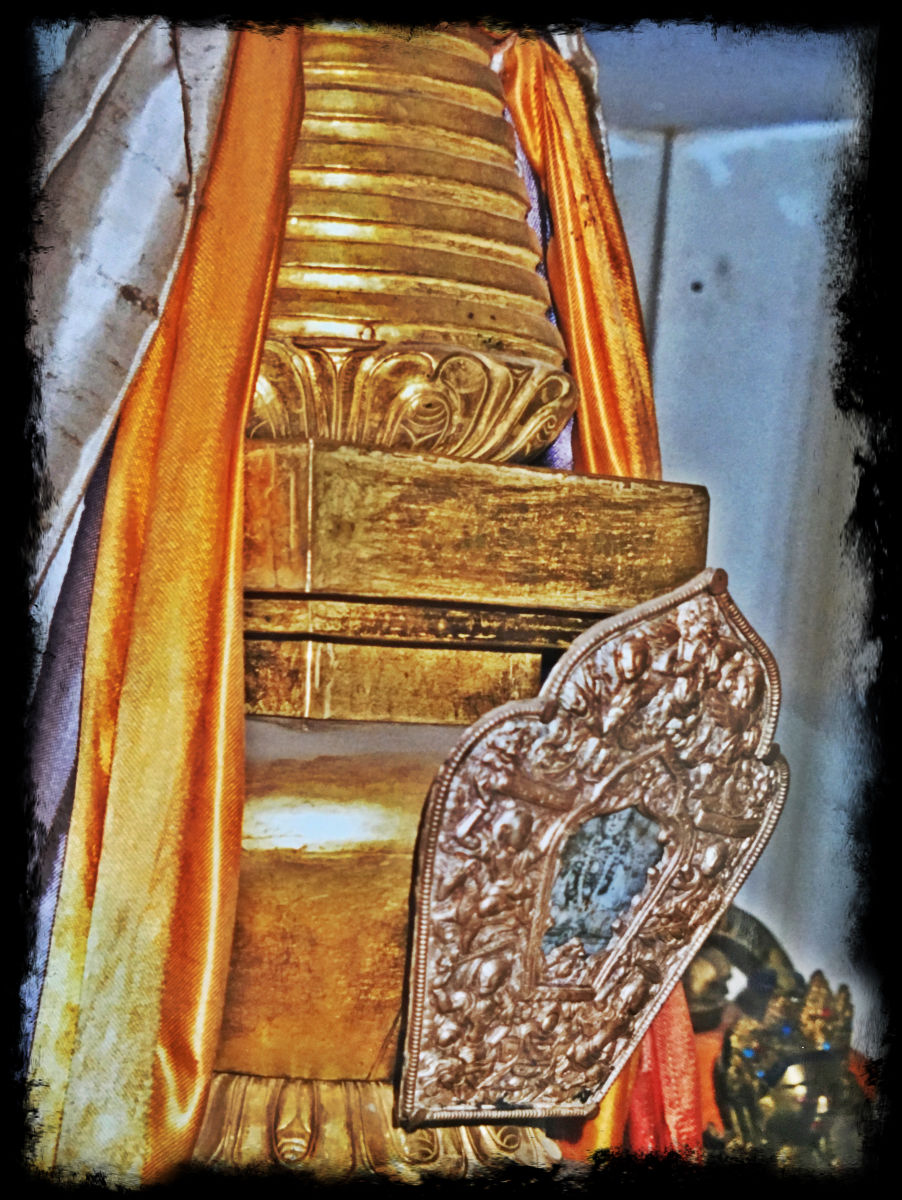
Hundreds of these amulets were lovingly created to assist and bless the spirit of a recently deceased member of the community.Tibetan amulets, sacred banners painted with careful precision. That all of these beautiful objects were to be burned within a funereal ritual and offered to the ancestral spirits was mystifying to me.Wooden reliefs were carved.Yarn mandalas were woven.
It's All in the Process
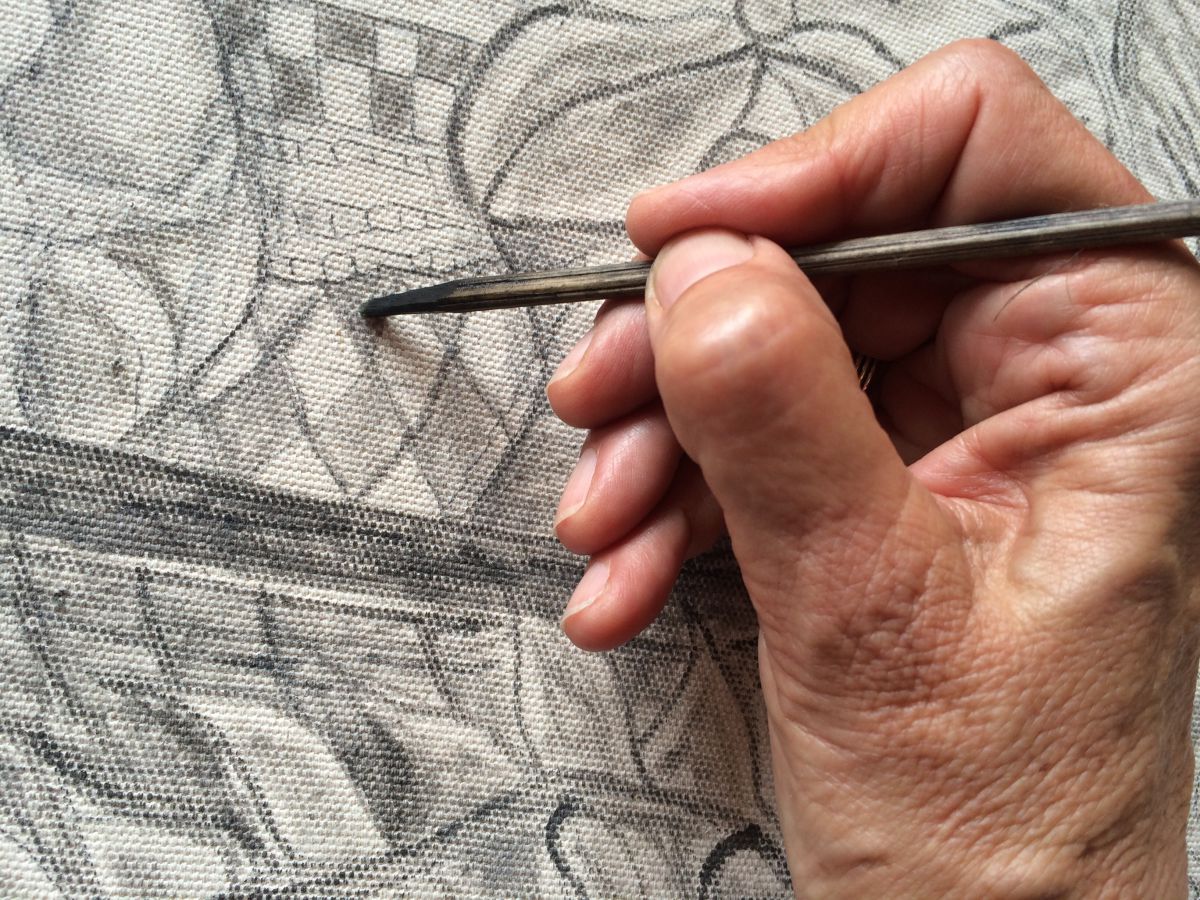
Drawing from within - time melts into another way of being, another way of knowing.
As I slowly digested this new way of looking at the purpose of creating, it began to feel more like home, more like something I already knew but had forgotten. For most artists, it's the process of creating that is of utmost value not the end product. I love the feeling of getting so lost in the making of art that time disappears. As a young practicing professional artist, I had experienced this phenomenon but had not really put much value in it. It was just the way it was.
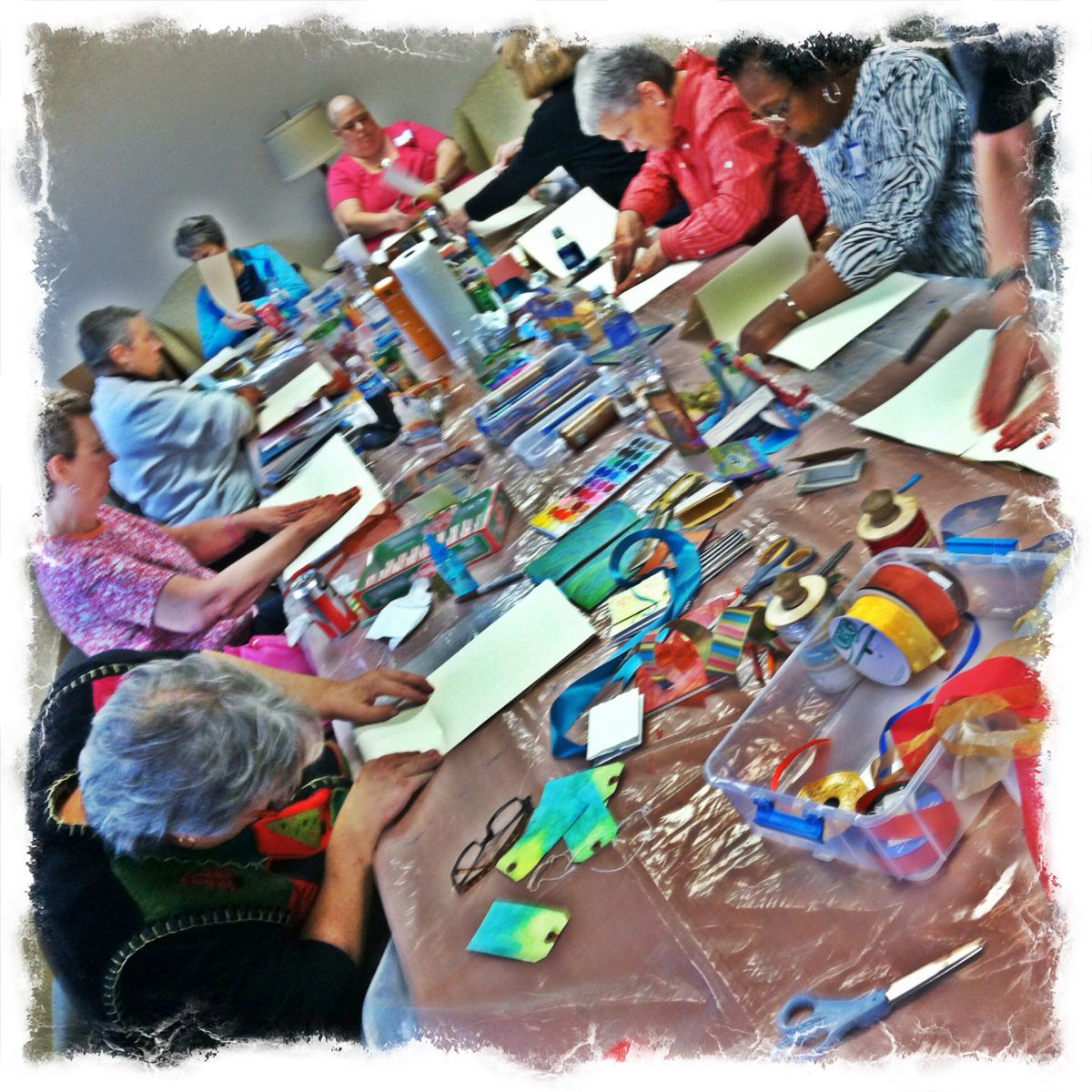
After returning home from India, my own art making practice began to shift as I slowly began to see this time of total absorption as form of mediation, a time when I was truly in the moment. Unlike the Tibetan monks who have a specific intention when they create, I began to allow a space to open, a quiet time where I could begin to hear another kind of language, a silent soulful language where the still, small voice within could be heard. The Tibetan sacred arts helped me get to this place.Healing Icons participants absorbed in the process.
The way I create my art has always influenced the way I teach. I realized that in the teaching practices I was developing for Healing Icons, trusting the process was one of my basic tenets. I was teaching cancer patients about the healing powers of creating. I was urging then to trust the process and pay attention to what came up for them while being creatively engaged. I encouraged them to be unattached to the end product. I advised them to try to stay present in the moment, to get lost in the creative trance. This is where healing can take place.
Creating art was becoming a form of meditation. The Tibetan sacred arts gave me that spark of inspiration that led me deeper into my art and healing practices.
Stay tuned to see what I come up with to celebrate our 20th anniversary! But for now tell us -
What cultures have inspired you to see things differently? What activities do you engage in where time disappears?Where do you find your sparks of inspiration?